Welcome to Talamh Beo

Hedges and Hedge-laying

at Freaghduff, Co. Tipperary

Farm Case Study: Living Farm Heritage​

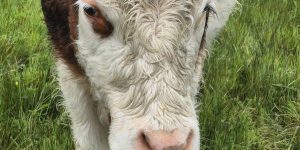
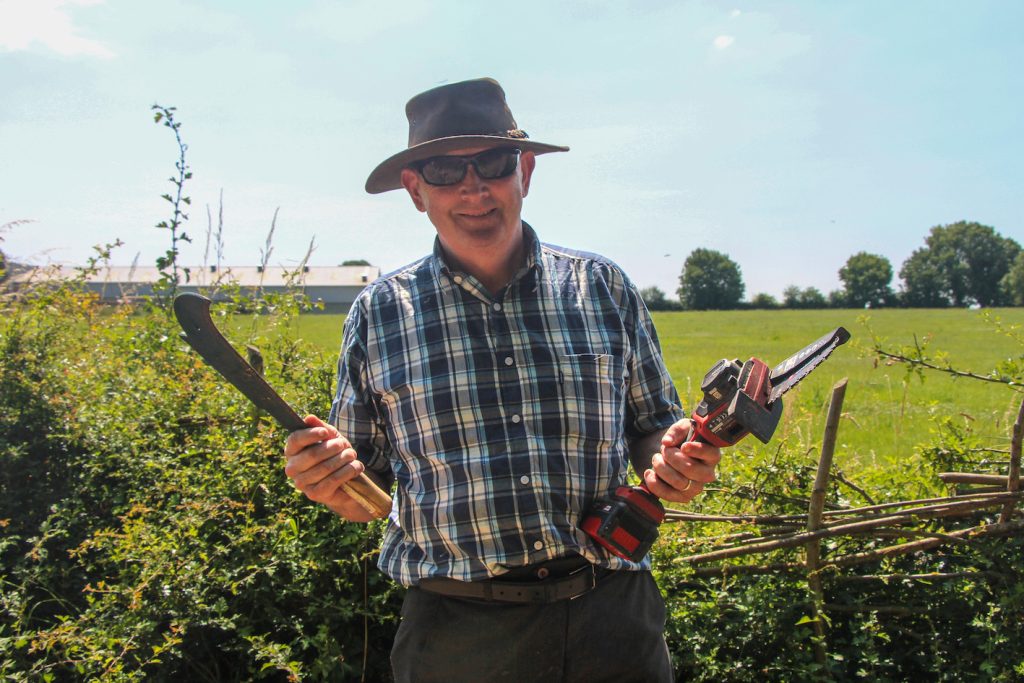
Pat Maher is the sixth generation of farmer at Freaghduff, Co. Tipperary. His 24-hectare farm lies in rolling pasture just north of the historic town of Cashel, in the shadow of Patrick’s Rock. Initially a dairy farmer, Pat converted to suckler farming and is now certified organic. Walking through Pat’s fields the first thing that strikes you are the abundant hedgerows, but Pat’s hedges weren’t always like this. ‘Trying to be a good farmer’, he explains, he used to cut them very low, before realising the vital role they played. Once he adopted a revised approach to his hedges, the benefits became apparent: ‘as I’ve left the hedges up … I’ve had shelter, I’ve had shade, and I’ve had a much nicer environment’. For Pat, this improved environment has materially benefitted his farm in multiple ways, from preventing soil erosion and flooding to providing his cattle shelter from the elements, resulting in less stressed, healthier animals, but it’s good for nature too. Hedges create an important habitat for plants, insects, birds and animals, which in turn benefits Pat’s cattle. His vibrant hedgerows, for example, create a habit for bats who feed on the midges that carry cattle diseases like bluetongue, contributing to the overall health of the herd. 

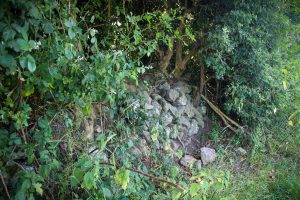
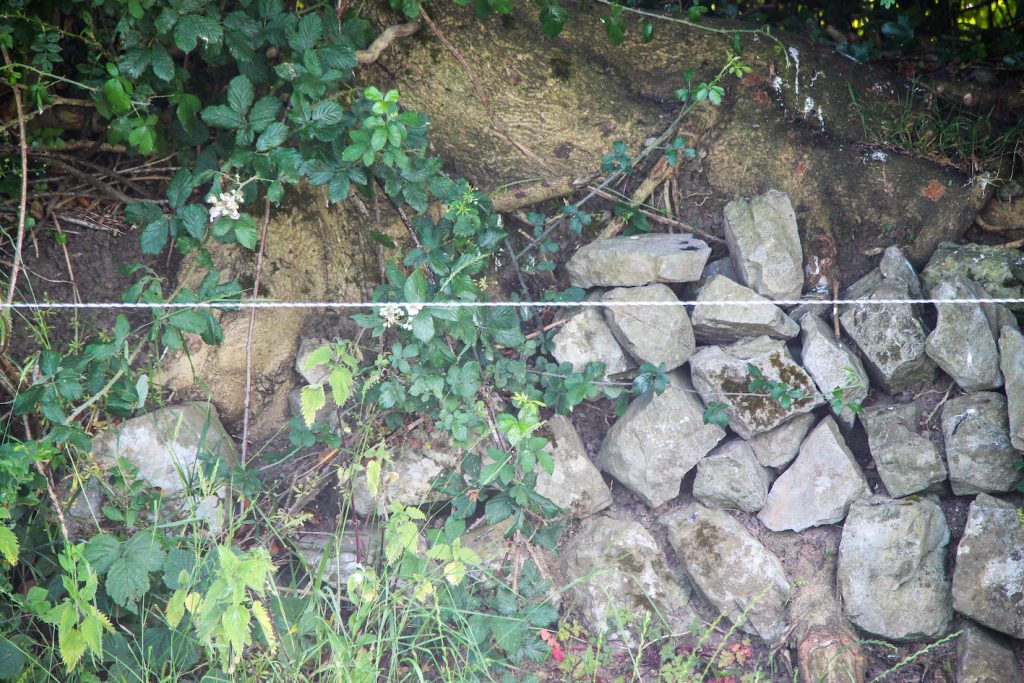
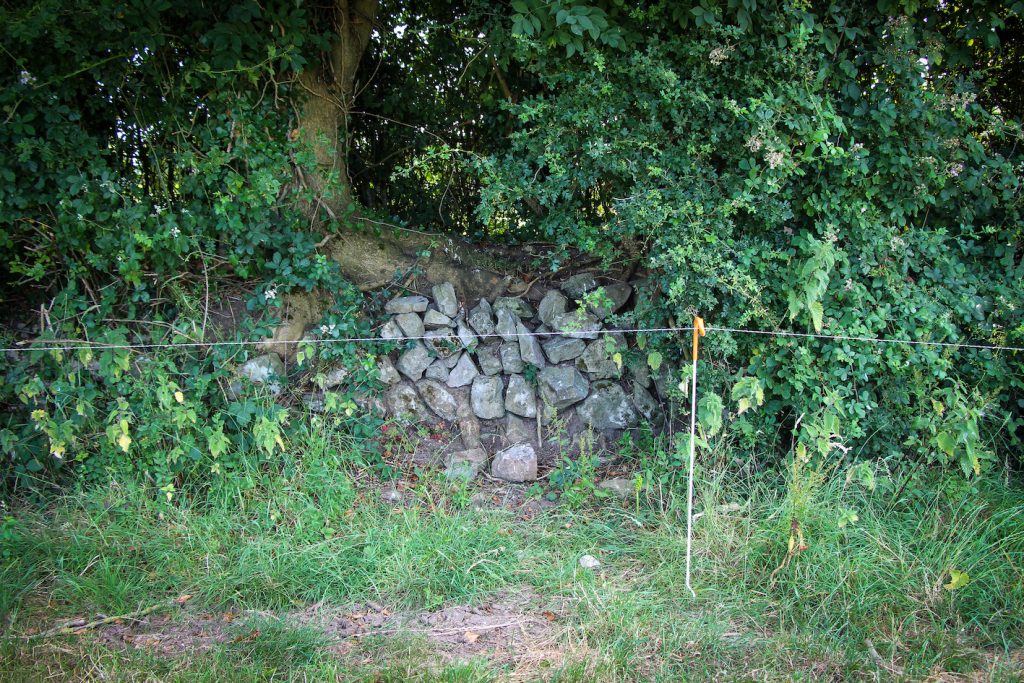
 In reviving his farm’s hedgerows, Pat is building on the work of his ancestors who built and planted many of the hedges on his farm over 200 years ago. Most Irish hedges date to the 1800s and later. Earlier medieval farming systems often relied on temporary fences, with more permanent boundaries reserved for townland or parish boundaries. Thousands of kilometres of hedges were planted during the late 1700s and 1800s, as the land was parcelled into discrete fields in line with ‘improved’ farming methods and the development of the estate system (Aalen 1965). Many of Pat’s hedges date from this period. His hedges of mature hawthorn and blackthorn are set on stone-faced earthen banks. This type of boundary, sometimes known as a ‘Louth fence’ was common in the nineteenth century (Robinson 1977, 65–7). As Pat explains, the bank served to retain water, providing a cool microhabitat beneath the trees. 


Healthy hedgerows need to be managed. One of the practices that Pat has embraced for managing his hedges is hedge-laying, a technique used to rejuvenate and thicken hedges, which can otherwise become sparse over time. It involves, partially cutting through the stems of the trees in the hedge, before laying the cut stems (or ‘pleachers’) diagonally and securing them with stakes and sometimes braced with horizonal ‘binders’. The partially cut stems stimulate new growth, lengthening the life of the trees in the hedge, while the horizontally laid vegetation creates a denser stock-proof barrier, and a habit for small nesting birds and mammals. Hedge-laying was certainly practiced historically in Ireland, although it never seems to have been as common as it was in Britain. Writing in the 1950s, folklorist Estyn Evans commented that ‘staked and pleached’ hedgerows were very rare in Ireland (1957, 110–11), although recent Irish hedgerow surveys do show regionally varying evidence for the practice (see Foulkes 2026, 49–50). Hedge-laying largely died out in Ireland in the mid-twentieth century, but the practice is undergoing going revival through promotion by organisations like Hedgerows Ireland. 

References

Aalen, F. H. A. (1965) Enclosures in Eastern Ireland. A general introduction, Irish Geography, Vol. 5, No. 2, 30–5. 

Evans, E. E. (1957) Irish Folk Ways.  London, Routledge. 

Foulkes, N. (2006) County Leitrim Hedgerow Survey Report. The Heritage Council.

Hedgerows Ireland

Robinson, P. (1977), The spread of hedged enclosure in Ulster. Ulster Folklife, Vol. 23, 57–69.

This project was funded by:

×