Welcome to Talamh Beo

cropped-Site-Icon.png

Talamh Beo's Theory of Change:
The Problem & Our Path


Our relationship with the land is broken

Food (and also fuel, flowers and fibres) are produced and distributed in ways that serve the profits of industrialised agribusiness and retail conglomerates.  Corporate interests are supported by transnational and national laws, regulations and norms.  The results are detrimental:

Socially … Marginalised groups are excluded or exploited, community cooperation is disappearing, local skills are lost, and access to nutrient-dense food is unequal.

Environmentally … Extractive and wasteful production, processing and transportation reduce seed and breed diversity, damage nature, and accelerate climate change. 

Economically … We import and export excessively.  Access to land is greatly restricted.  Small-scale farmers, producers and retailers are being edged out and rural economies are in decline.

Democratically … Power is concentrated in the hands of small numbers of distant shareholders.  Even if people understand and care about these problems, they can feel overwhelmed by their scale and complexity.

What is a Theory of Change?

A Theory of Change sets out the problem an organisation is trying to tackle, and the steps to get to desired outcomes.
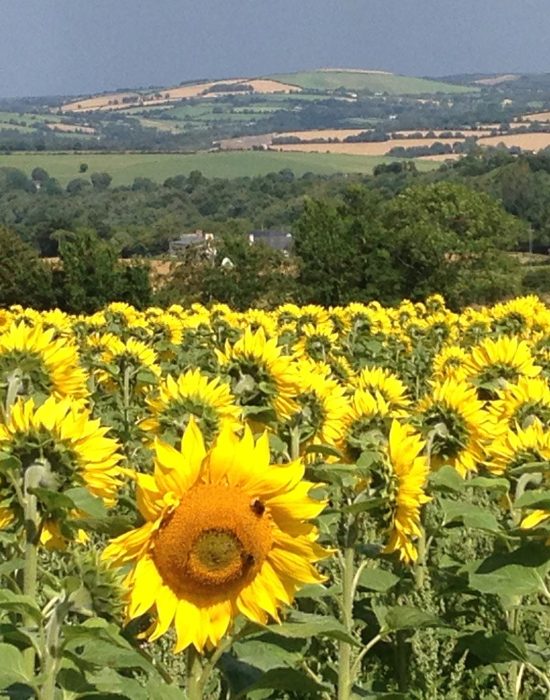
robins glen sunflower fields


Underpinning our approach:

Agroecology = farming with nature, not against it, to produce healthy food while protecting the land, supporting farmers, and connecting producers and consumers

Food Sovereignty = the right to healthy and culturally-appropriate food, produced through ecologically sound and sustainable methods

The challenge is big,
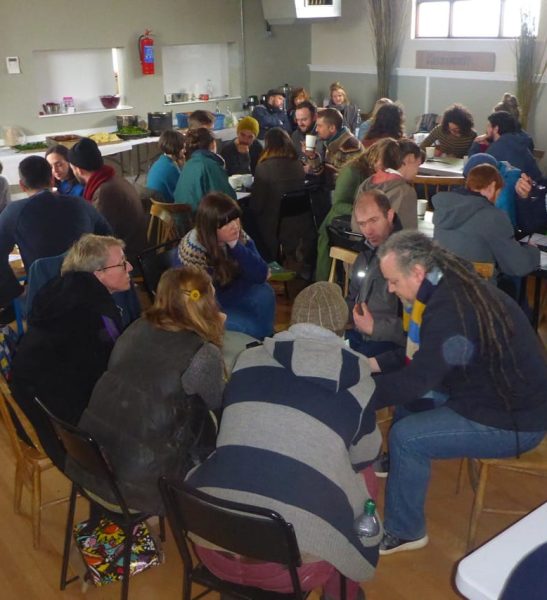
groups discussing

 LAND can be regenerated …

Through the adoption of approaches that are adapted to and restore local ecosystems.

PEOPLE can make more sustainable choices …

With access to a diverse range of nutritious food that is affordable, and locally and ethically produced. 

COMMUNITIES can be strengthened …

By resilient local food systems that revitalise economic and social activity in rural areas.

Talamh Beo: advocating for better ways to use the land in Ireland

We are part of global movement working to transform land use for the benefit of all.  We do this by:

  1. increasing our membership of farmers, land workers and concerned citizens
  2. building strong alliances with individuals and organisations across society
  3. undertaking meaningful activities that support people to take positive practical action.

Opening minds and changing practices

We seek to move individuals and organisations through these steps:

  • Awareness: recognising that the status quo is harmful and that this is relevant to them 
  • Belief: seeing that alternative ways of doing things are possible
  • Action: trialling new approaches and being encouraged by favourable outcomes
  • Growth: embedding new practices and motivating others through sharing their experiences. 

So that, over time, more:

  • Elected representatives create legislation and public policy that supports better food systems and agroecological practices..
  • Statutory and semi-state bodies implement public policy that supports better food systems and agroecological practices..
  • Farmers, including new entrants, women and other marginalised groups, are able to earn viable livelihoods from the land.
  • Farm labourers are treated well and compensated fairly for their work.
  • Food processors source local ingredients for their products.
  • Food vendors sell local produce through a diverse range of sales channels.
  • Procurers buy local food for schools, hospitals and similar organisations.
  • Consumers purchase and enjoy locally produced food.
  • Educational institutions teach their students about agroecology and food sovereignty.
  • Researchers add to the evidence base supporting new ways of working and living.
  • Non-governmental organisations incorporate relevant issues into their work.
  • Media outlets challenge dominant narratives about our food system.
×