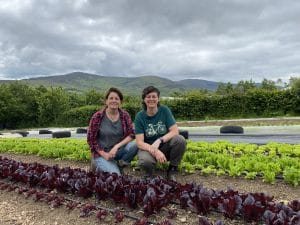



Crawfords Farm sits on 28 acres of land that once belonged to Owen’s grandfather — a traditional mixed farm that, in many ways, still looks much the same. When Mimi and Owen took over in 2014, they immediately applied for organic certification. There were no organic schemes at the time, but certification mattered deeply, especially when selling direct to customers who didn’t yet know them.
Mimi is an environmental scientist, and from the beginning, every decision balanced food production with ecological wellbeing. They wanted a farm that enhanced their own quality of life while also improving the land. They briefly considered expanding to meet demand, but ultimately chose to stay small and do it well — a deliberate choice to avoid pressure, risk, and burnout.
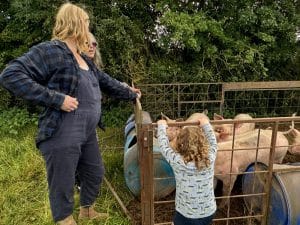
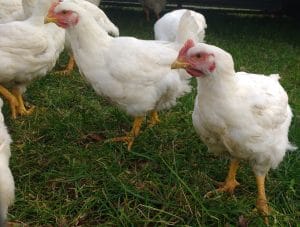
Crawfords Farm’s early years coincided with a period of regulatory flux around raw milk. That uncertainty pushed them to connect with cheesemakers and other small‑scale dairy producers, building a network that would later prove invaluable. They began producing raw milk, butter, cream, and buttermilk, and kept a few cows for beef. Pigs were added to upcycle skimmed milk — a practical, circular solution that turned waste into high‑quality meat. Broiler chickens followed, completing a small but cohesive protein system.
Today, Crawfords Farm is a micro‑dairy at the heart of a holistic, low‑input, values‑driven enterprise.
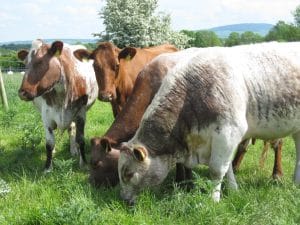
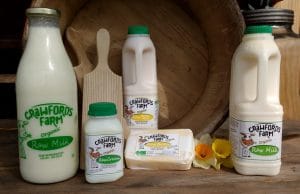
Crawfords Farm milks just ten Irish Shorthorn cows — a scale almost unheard of in modern Irish dairy. Only five registered raw‑milk micro‑dairies exist in the entire country. The dominant mentality in Irish dairy — “go big or go home” — pushed most small producers out decades ago. Regulation, consolidation, and the high price of conventional milk all contributed to the decline.
Yet demand for raw milk is huge. Customers seek it for flavour, nutrition, and connection to place. Many micro‑dairies now sell cheese rather than milk, some larger dairies use vending machines to reach customers. Mimi and Owen see enormous scope for new entrants — but also real barriers. Regulation is intimidating, and fear keeps many would‑be micro‑dairies from starting. Knowledge sharing and peer support are essential.
For Crawfords Farm, processing on‑farm is non‑negotiable. It ensures traceability, quality, and control. Butter and cream emerged not from strategy but necessity — Saturday’s milk needed to be used quickly due to its short shelf life. That practical constraint became a signature product line.
All meat is sold direct. Frozen meat was initially a challenge in a culture accustomed to fresh butcher counters, but direct selling allowed them to build trust and educate customers. They sell at the Milk Market in Limerick every Saturday, through their farm shop, and via local drop‑offs. Ninety percent of market sales are pre‑ordered, giving them the best of both worlds: predictable income and meaningful customer contact. Mimi loves the market — the conversations, the relationships, the sense of community.
Processing remains the biggest bottleneck. They are fortunate to be just 30 minutes from an abattoir and to have worked with the same butcher family for 15 years. But that butcher is now busier, flexibility is reduced, and changes in Department inspectors mean certain parts of the animal can no longer be returned. These small shifts have big impacts on small producers.
Supply fluctuates, making retail supply difficult. Everything is direct sale — a necessity, not a choice.
Chilled distribution is one of the hardest parts of running a micro‑dairy. In the early days, Mimi and Owen did all deliveries themselves. Over time, they found workarounds: Sheridans Cheesemongers take one large weekly delivery and distribute through their own network; one retailer collects directly using their own logistics; family members help with deliveries.
They have tried to cluster outlets geographically to streamline routes, but alignment is rare. Intermediaries add cost, and finding collaborators with shared values is difficult. A collective chilled‑distribution model would be transformative for small producers, but it doesn’t yet exist.
Meat distribution is simpler as they’ve opted to route that to either the market stall or direct deliveries, rather than retailers — frozen product is also more stable — but this is still constrained by processing capacity.
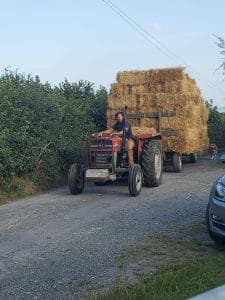 Connection, Communication, and Community
Crawfords Farm maintains strong customer relationships even when people aren’t buying weekly. Their website tells the story; an email list provides updates; and they host one or two farm walks each year, often with Farming for Nature or Talamh Beo. They avoid social media — a privilege of having started before it became essential — and find email far more effective.
In the early years, collaboration was limited simply because so few others were doing similar work. Today, Mimi encourages new entrants to collaborate wherever possible. Many small producers operate in silos — goat meat, rabbits, niche dairy, unusual horticulture are innovation opportunities — but the supply chains could connect better if people knew about each other. There is no resource that maps who is doing what, and opportunities remain hidden.

“You don’t have to do everything on your own. Compromise is hard, but collaboration is becoming more and more important.”
Crawfords Farm has built a thriving micro‑dairy and mixed protein enterprise rooted in ecological principles, community connection, and small‑scale integrity. Their reflections include:
They have received some state support — organic processing grants (bottling machine, walk‑in fridge), TAMS solar panels, machinery, cattle crush — but most of their knowledge came from other farmers, NOTS, BioFarm, and trial‑and‑error learning.

Pathways to short food supply chains
These case studies have been created to serve as a tool for existing & new entrant farmers. We would like to thank all the producers here who have generously shared their knowledge, advice & lessons they have learned along the way.
